Flight anxiety: what it is and what helps
Flight anxiety is fear or intense unease before or during air travel, also called fear of flying, aerophobia or aviophobia. It can cause racing thoughts, physical symptoms and avoidance. Cognitive behavioral therapy with gradual exposure can help; practical coping skills can support you before and during a flight.
By FlightAnxiety.com editorial team · Updated
Free, printable, and designed for your pocket on flight day
What is flight anxiety?
Flight anxiety — also called fear of flying, aerophobia or aviophobia — is fear or intense unease before or during air travel. It ranges from takeoff nerves to avoiding flights altogether. It is common, it is not a sign that flying is unsafe, and it responds well to exposure-based treatment and practical self-help.
Last reviewed: · Sources listed at the bottom of this page
Key takeaways
- It is common. Commonly cited estimates put some degree of flight anxiety at 25–40% of travelers, and a diagnosable flying phobia at roughly 2.5–6.5% of people. Estimates vary between studies (research review).
- Flying is very safe. IATA recorded 51 accidents across 38.7 million commercial flights in 2025, including 8 fatal accidents. The all-accident rate was 1.32 per million flights; this is not the chance of a passenger dying (IATA).
- Keep your seatbelt fastened. Turbulence can cause serious injuries, especially when people are unrestrained. Follow crew instructions and keep your belt fastened whenever seated (FAA).
- Breathing helps measurably. Five minutes a day of exhale-focused cyclic sighing improved mood and lowered breathing rate more than the same amount of mindfulness meditation (Balban et al., 2023).
- Sedatives are not a cure. In one controlled study, alprazolam reduced how anxious flyers felt, but raised heart and breathing rate, and those who took it did worse on the next flight without it (Wilhelm & Roth, 1997).
Symptoms of flight anxiety
In the body
- Racing or pounding heart
- Shortness of breath or tight chest
- Sweating, shaking or nausea
- Dizziness or feeling faint
In the mind
- Catastrophic thoughts at every sound or bump
- Dread that builds days or weeks before a trip
- Fear of panicking or losing control on board
In behavior
- Cancelling or avoiding flights
- Checking the aircraft, weather or crew for danger signs
- Relying on alcohol or sedatives to get through a flight
Common triggers
- Turbulence and unexplained sounds
- Loss of control — someone else is flying
- Being enclosed, with no way to leave
- Heights and the idea of falling
- A previous frightening flight
- Fear of having a panic attack on a plane
- News coverage of rare accidents
If anxiety stops you from travelling, affects your health, or you are thinking about medication, speak to a doctor or licensed mental health professional (NHS guidance).
Can turbulence crash a plane?
Routine turbulence is usually uncomfortable. Severe turbulence can be hazardous, and crews work to avoid it. Keep your seatbelt fastened whenever seated, follow crew instructions, and read the safety evidence behind the bumps.
Watch and read the answerOvercoming flight anxiety works on three levels
Understand
Facts starve fear. Learn how flying actually works — the real safety numbers, what turbulence is, what those sounds mean — and your imagination loses its favorite material.
Regulate
Breathing and relaxation techniques talk directly to your nervous system in its own language. They turn a ten on the panic scale into a manageable four.
Rewire
Every calm-enough flight teaches your alarm system that it was wrong. Exposure — gradual, repeated, safe experience — is what makes the change permanent.
Start where your fear lives
Overcoming Fear of Flying: the Complete Guide
Causes, safety facts, techniques and treatments — everything in one place.
Read the guide →
Turbulence Anxiety: Why It Feels Dangerous
Why bumps feel terrifying, why they aren't — and what to do in the moment.
Read the guide →
Pre-Flight Anxiety: Your 24-Hour Game Plan
The dread beforehand is often the worst part. Here's how to defuse it, step by step.
Read the guide →
Relaxation Techniques for Flying Anxiety
Breathing, grounding and muscle relaxation — the exact exercises, step by step.
Learn the techniques →
15 Things That Help With Flight Anxiety
Practical, tested tips — from seat choice to what to pack to what to skip.
See the tips →
Fear of Flying Treatment: What Actually Works
CBT, exposure, VR therapy, airline courses and apps — an honest comparison.
Compare options →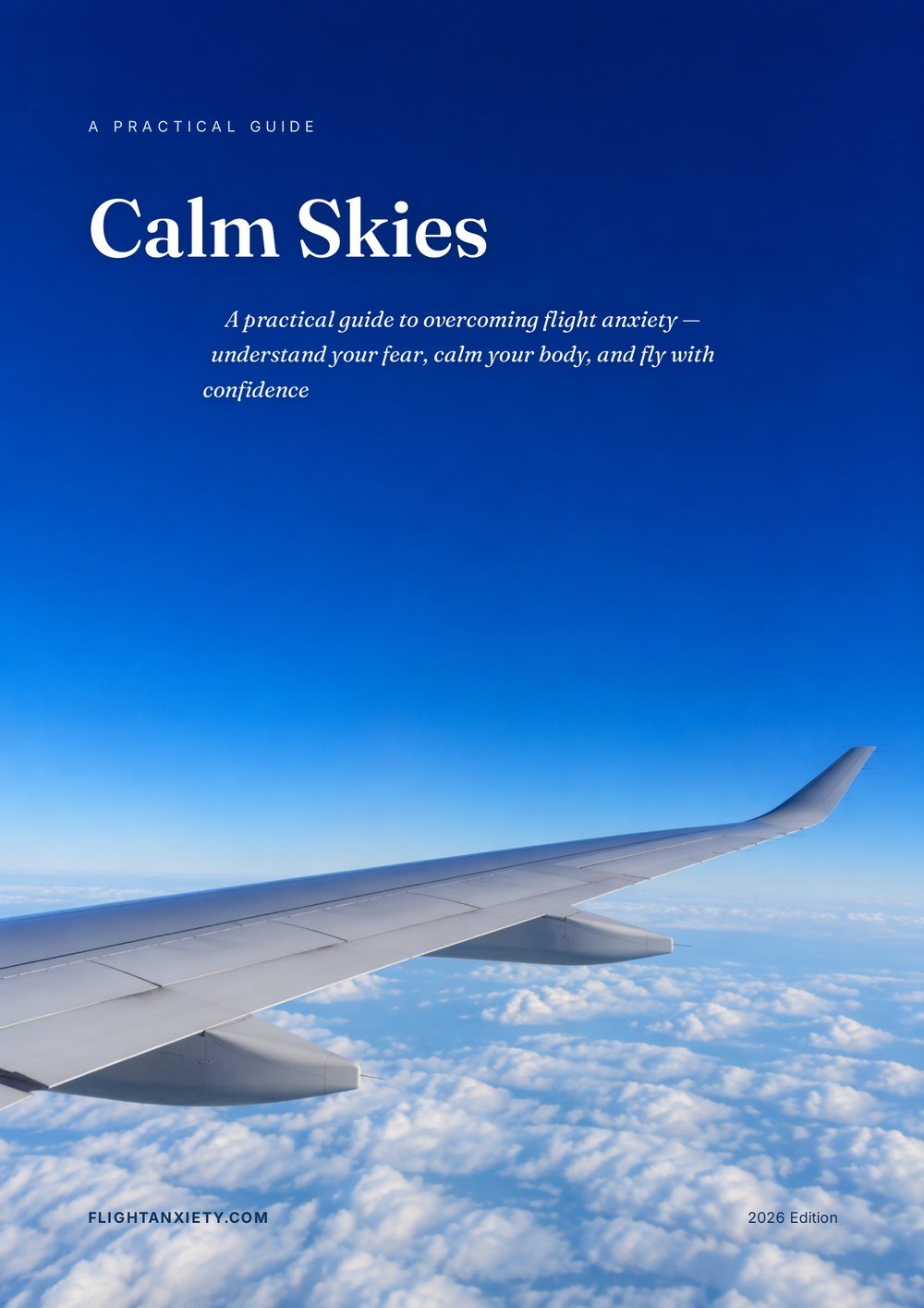
Calm Skies: the guide that flies with you
Everything on this site — and much more — in one beautifully designed, 39-page guide. Understand your fear, calm your body, and walk onto your next flight with a plan.
- All techniques as step-by-step exercises
- The 30-day calm flight plan
- Printable Calm Flight Card for your pocket
- Honest guide to remedies, supplements & medication
Instant download · 30-day calm-or-refund guarantee
Fear of flying treatment: what works?
Exposure-based therapy has the strongest evidence. CBT often includes gradual exposure to feared situations (NHS guidance). Courses and apps vary in their approach and supporting evidence.
| Option | What it involves | Evidence | Cost examples (USD) | Best for |
|---|---|---|---|---|
| Exposure-based CBT | Sessions with a psychologist; gradual, guided exposure to flying | Strongest evidence for specific phobias | Ask about insurance and sliding-scale fees. Open Path: $40–$70 per individual session plus $65 membership for eligible clients; confirm exposure-therapy availability | Avoidance, panic, long-standing fear |
| Virtual reality exposure | Simulated takeoffs and turbulence in a therapist's office | Good; repeatable without buying tickets | Per session with a therapist who offers VR | When real flights are impractical at first |
| Fear of flying courses | Online or in-person education and coping skills. Some in-person courses include a flight; online SOAR packages do not promise one | Mostly program-reported outcomes | SOAR: Rapid Relief $199.95; Complete Relief $299.95. Other packages and providers differ | People who want structure and a group |
| Medication | Prescribed by a doctor for the day of travel | May reduce felt anxiety short-term; one trial found it hindered progress on later flights (Wilhelm & Roth) | Doctor visit plus prescription | Only with medical advice — not a long-term fix |
| Self-help and apps | Breathing practice, guided plans and flight explanations; for example, SkyGuru | Evidence depends on the tool. The breathing trial did not test a flight-anxiety app | Our guides are free; Calm Skies is $29. App purchases vary by store and plan; check current pricing | Starting today, before or alongside therapy |
These are provider-listed examples, not US averages or a ranking of the best programs. Eligibility, availability and prices can change. Ask about the full cost, refund terms and whether a flight is included. To find a therapist in the US, ask your doctor for a referral or use the ADAA directory. Full detail: fear of flying treatment · courses and therapy compared.
Flight anxiety FAQ
What is flight anxiety?
Flight anxiety is fear or intense nervousness before or during air travel. Between 25% and 40% of travelers experience it to some degree, and for 2.5–6.5% of people it becomes a true phobia (aviophobia) that leads them to avoid flying altogether.
What are the symptoms of flight anxiety?
Physical symptoms include a racing heart, shortness of breath, sweating, shaking, nausea and dizziness. Mental symptoms include catastrophic thoughts, dread that builds before a trip and fear of losing control. Behavioral signs include cancelling flights, constantly checking for danger and relying on alcohol or sedatives to fly.
Does medication help with fear of flying?
Medication prescribed by a doctor may reduce how anxious you feel on the day, but it is not a cure. In one controlled study, alprazolam lowered self-reported anxiety yet raised heart and breathing rate, and people who took it did worse on a later flight without it. Discuss any medication with a doctor; exposure-based therapy has the stronger long-term evidence.
Can flight anxiety be cured?
Yes — flight anxiety is highly treatable. Research shows that exposure-based cognitive behavioral therapy (CBT) helps the large majority of people with specific phobias. Self-help techniques such as breathing exercises, education about aviation, and gradual exposure also produce lasting results for mild to moderate cases.
What is the fastest way to calm down during a flight?
A slow, comfortable breathing exercise may help you settle. A 2023 trial studied five minutes of daily breathing practice over one month and found benefits for mood and breathing rate; it did not establish the fastest way to stop flight anxiety. Stop any breathing exercise if you feel dizzy, and ask the cabin crew for help if needed.
Is turbulence dangerous?
Yes, turbulence can cause injuries, particularly when passengers or crew are unrestrained. Ordinary bumps do not mean a crash is imminent. Keep your seatbelt fastened whenever seated and follow crew instructions. The FAA advises these precautions because unexpected turbulence can throw people from their seats.
How safe is flying now?
IATA’s latest annual report covers 2025: 51 accidents in 38.7 million commercial flights, including 8 fatal accidents. Its all-accident rate was 1.32 per million flights. These global historical figures are not a forecast for a particular flight or a passenger fatality probability.
How much does fear-of-flying help cost?
Our online guides are free. As checked on 13 September 2026, SOAR lists Rapid Relief at $199.95 and Complete Relief at $299.95. Eligible Open Path clients pay $40–$70 for individual therapy sessions plus a $65 membership fee; ask specifically about CBT and exposure therapy. Provider terms and prices can change.
How can I find a therapist for fear of flying in the US?
Use the ADAA directory or ask your doctor for a referral. Look for a licensed professional who treats specific phobias with CBT and exposure therapy. Confirm state licensure, experience with flight anxiety, fees and insurance before booking. For online care, ask whether the clinician can treat you in your state.
Sources
- Oakes & Bor (2010), The psychology of fear of flying, Part I — Travel Medicine and Infectious Disease
- IATA — 2025 Safety Report (released March 2026)
- FAA — Turbulence: staying safe
- Balban et al. (2023), Brief structured respiration practices — Cell Reports Medicine
- Wilhelm & Roth (1997), Effects of alprazolam on flight phobics during exposure — Behaviour Research and Therapy
- NHS — Phobias
- Anxiety and Depression Association of America — Find help
By the FlightAnxiety.com editorial team. Our AI-assisted editorial work summarises published research and aviation guidance. We are not clinicians or aviation regulators, and this page has not been independently clinically reviewed. It is educational and not medical advice. How we make this site.
The Calm Flight Card
The whole method on one printable card: what to do before you fly, in the air, and when panic rises. Fold it, pocket it, fly with it.
Free instant download — enter your email at checkout and the PDF arrives immediately. No spam, ever.