Can Turbulence Cause a Plane Crash?
It is the question anxious flyers type at 2am. The honest answer contains one uncomfortable historical detail — and a great deal of reassurance.
In practical terms, no. Turbulence does not bring down modern airliners. Aircraft are certified to withstand loads far beyond the worst turbulence they will ever meet, and turbulence alone has not destroyed a commercial jet in modern service. The real risk from turbulence is injury to people who are not wearing a seatbelt — which is exactly why that one habit matters.
The short answer, without hedging
Turbulence does not bring down modern airliners. When you search this question, what comes back is usually one of three things: a disaster film from 1997, a personal-injury law firm hunting for clients, or a forum thread where nobody cites a source. None of that is evidence.
What keeps the question feeling unresolved is that the fully honest answer is not "never, in all of history." It is "not in the era of modern aircraft design, weather radar and turbulence forecasting." That distinction matters, because a half-answer is precisely what an anxious mind picks apart at 2am. So let us do the whole thing properly.
What the accident record actually shows
Aviation is the most exhaustively investigated form of transport on earth. Every accident involving a US civil aircraft is examined by the National Transportation Safety Board, and the findings are public — you can search the database yourself. That transparency is what makes this question answerable rather than a matter of opinion.
Search it and a pattern appears. Turbulence shows up constantly in injury reports and essentially never as the cause of an airframe loss. The rare historical exceptions are genuinely old. The most cited is a BOAC Boeing 707 that broke up near Mount Fuji in 1966 after flying into extreme mountain-wave turbulence — a 1960s aircraft, flown deliberately close to a mountain in conditions that were not then forecastable, and an event that directly shaped the rules and the science that followed.
Why the aircraft cannot be shaken apart
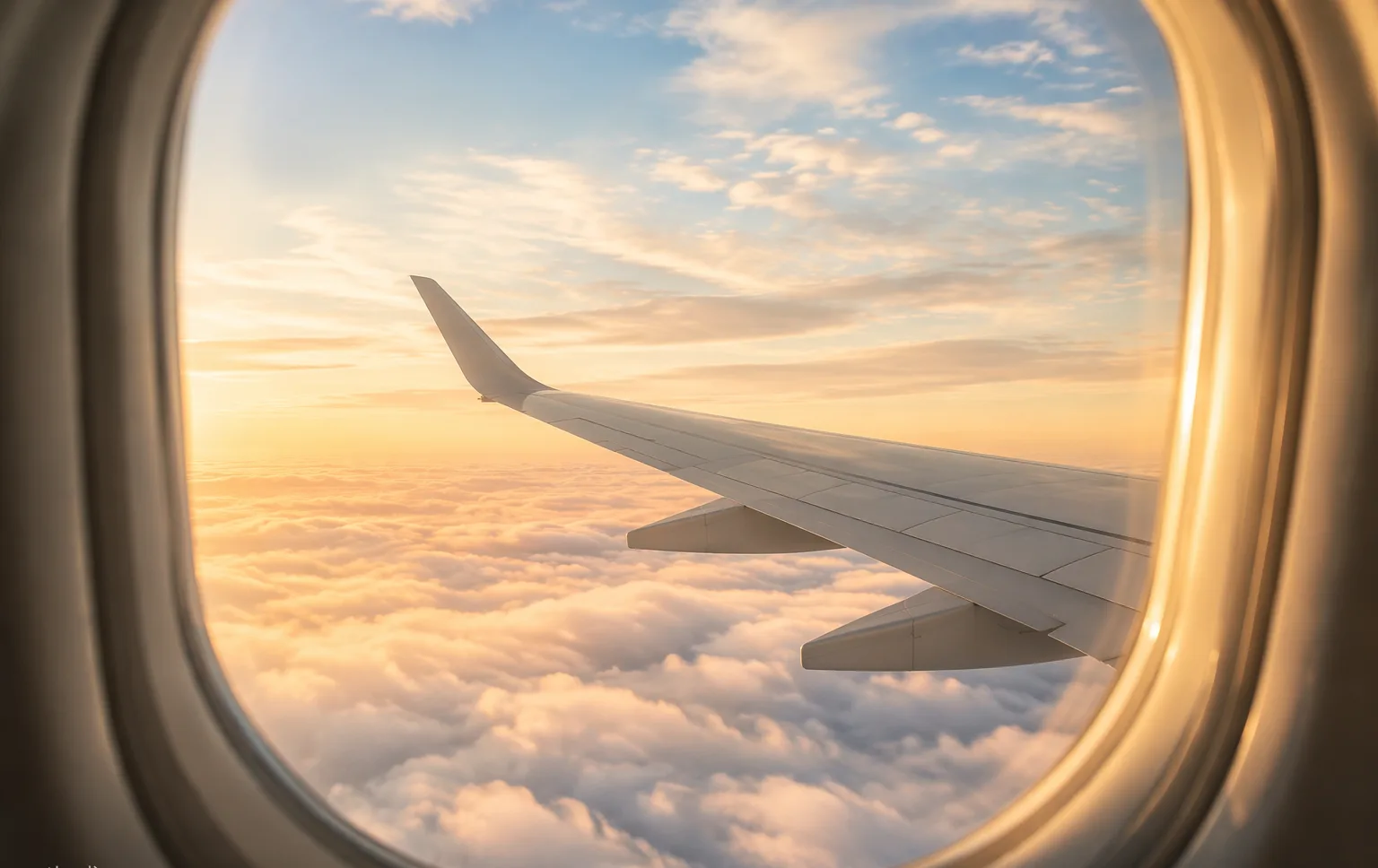
An airliner's wings are not rigid beams bolted to a tube. They are engineered to flex, and they are tested to extremes no flight will ever produce. In certification testing, wings are bent upward until they break — far beyond the maximum load the aircraft is ever cleared to experience in service. The flexing you can see from the window is not the structure struggling. It is the structure doing precisely what it was designed to do, the same way a skyscraper is designed to sway and a suspension bridge to move.
Turbulence loads sit nowhere near those limits. Severe turbulence — the rare kind where walking is impossible and loose objects leave the floor — is a violent experience for a human body in a seat, and an unremarkable one for the airframe around it. Your inner ear and the aircraft's structure are having two completely different days.
Two crashes people misattribute to turbulence
Two accidents come up repeatedly in forum threads as "turbulence crashes." Neither is one, and understanding why is genuinely reassuring rather than alarming.
- American Airlines 587 (2001). The aircraft encountered wake turbulence from a preceding jet, but the wake did not break it. The investigation centred on large, rapid rudder inputs made in response to that wake, and the resulting loads on the vertical stabiliser. The outcome was changes to pilot training on rudder use — a control-input finding, not a "turbulence destroys aircraft" finding.
- Storm-related losses. Accidents involving severe thunderstorms are sometimes filed mentally under "turbulence." Thunderstorm cores involve hail, extreme up- and downdrafts, icing and lightning simultaneously — which is why pilots carry weather radar and route around them by wide margins. Avoiding storms is routine, daily, unremarkable work.
The distinction is not pedantry. It is the difference between "the sky can destroy an aeroplane at random" and "specific, identifiable, avoidable conditions are actively avoided." Only one of those is true.
The risk that is actually real
There is a genuine turbulence risk, and it is worth taking seriously — because unlike the imagined one, you can eliminate it completely in two seconds.
People get hurt in turbulence when they are not restrained. The FAA's guidance on this is unambiguous, and the injury reports follow one pattern with monotonous consistency: unbelted passengers, and cabin crew who are on their feet by necessity. Serious injuries are a small annual number across an entire national system carrying hundreds of millions of people — and the large majority involve someone who was not wearing a belt.
What pilots actually do about turbulence
Watching the crew is the most reliable instrument you have, and here is what they are doing when you cannot see it. They brief expected turbulence before departure from meteorological reports. They receive and share pilot reports from aircraft ahead on the same route. They request altitude changes to find smoother air. In sustained turbulence they slow to a specific published speed that reduces the loads the aircraft experiences.
Every one of those actions is about your comfort and the smoothness of the ride. None of them is about the aircraft's survival, because that was never in question. If a crew member is doing a service run with a trolley, you have all the information you need about the severity of what is happening.
Is turbulence getting worse?
Yes, and the headlines about this are accurate — just incomplete. Research analysing four decades of atmospheric data found a substantial increase in severe clear-air turbulence over the North Atlantic between 1979 and 2020, linked to climate change strengthening wind shear in the jet stream.
What the headlines leave out is the part that matters to you: more turbulence does not mean more danger. It means bumpier rides, more seatbelt-sign time, and more investment in forecasting. The aircraft's structural margin is not being approached, let alone challenged. Expect somewhat bumpier decades ahead. Do not translate that into a less safe sky, because that is not what the data says.
If uncertainty is your particular trigger, that is now largely fixable — you can check the turbulence forecast for your specific route before you fly, and replace "anything could happen" with a concrete expectation.
Frequently asked questions
Has turbulence ever caused a plane to crash?
Not in modern commercial jet operations. The rare historical cases date from the 1960s and involved aircraft designs, procedures and forecasting that no longer exist. Those accidents are a large part of the reason today's standards are what they are.
Can severe turbulence break a wing?
No. Wings are tested in certification by bending them until they fail, far beyond any load an aircraft is cleared to meet in service. Turbulence loads are nowhere near those limits. Visible wing flex is the design working as intended.
Why do people get injured in turbulence then?
Almost entirely because they were not wearing a seatbelt. Unrestrained people and objects keep moving when the aircraft moves under them. Wearing your belt loosely whenever seated removes nearly all of the real risk.
Do pilots ever get frightened by turbulence?
Pilots treat turbulence as a comfort problem, not a safety one. They brief it, share reports with other aircraft, change altitude to find smooth air, and slow down when needed. Their concern is the ride quality, not the aircraft.
Is clear-air turbulence more dangerous because it's invisible?
It is harder to predict, not more dangerous. It cannot be seen by weather radar, which is why the seatbelt rule exists — being belted means unexpected bumps are a non-event rather than an injury risk.
Sources & further reading
- Federal Aviation Administration (n.d.). Turbulence: Staying safe. U.S. Department of Transportation. View source
- National Transportation Safety Board (n.d.). Aviation accident reports. NTSB. View source
- National Transportation Safety Board (n.d.). Aviation accident database & query tool. NTSB. View source
- International Air Transport Association (2026). Annual Safety Report. IATA. View source
- Prosser, M. C., Williams, P. D., Marlton, G. J., & Harrison, R. G. (2023). Evidence for large increases in clear-air turbulence over the past four decades. Geophysical Research Letters, 50(12). View source
Want the complete system?
Calm Skies bundles every technique on this site into one calm, step-by-step guide — including the 30-day plan and the printable Calm Flight Card.
Keep reading
Turbulence Anxiety: Why It Feels Dangerous
What turbulence is, why it can't hurt the plane, and what to do when it starts.
Read the guide →
How to Check Turbulence Before Your Flight
Read a turbulence forecast properly — and know when checking stops helping.
Read the guide →
Relaxation Techniques for Flying Anxiety
The exact breathing and grounding exercises to use when the bumps start.
Read the guide →